
People grab their phones hundreds of times a day to find answers quickly. These quick searches, known as micro-moments, happen when someone needs information right away. Google processes millions of searches every minute, and many of these are micro-moments tied to user intent. Think about a time when you searched for a nearby café or how to fix a flat tyre. Those moments shape choices and open doors for businesses to connect.
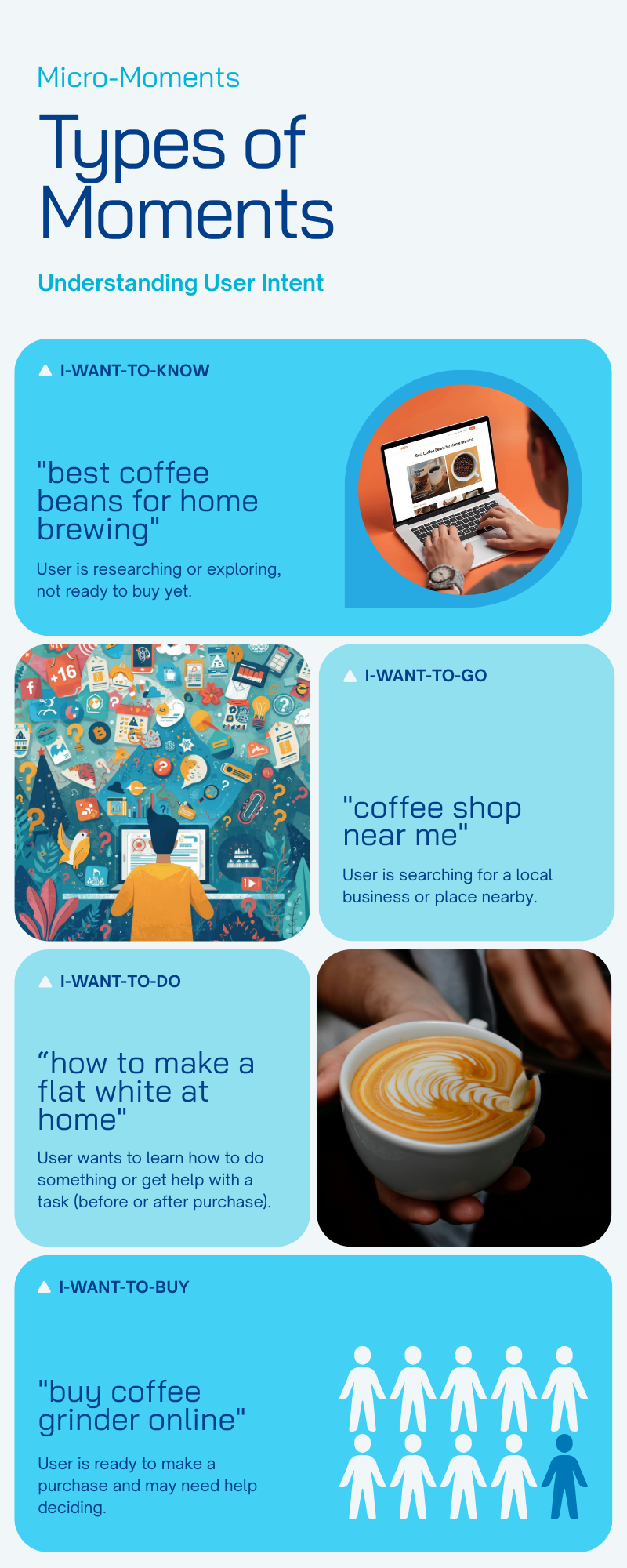
Micro-moments refer to brief times when people act on a need, like learning something new or buying a product. They fall into four main types: I-want-to-know, I-want-to-go, I-want-to-do, and I-want-to-buy. Each one reflects real-time intent from mobile search or voice search. For marketers, spotting these signals means turning casual searches into sales. Businesses that respond fast see better results, such as higher click-through rates and more conversions.
This article explains how to use micro-moment insights for better decisions. You will learn the types, ways to gather data, frameworks for campaigns, real examples from Australia, and a simple plan to start. By focusing on intent data, you can create content that meets needs exactly when they arise. The goal is to build trust and drive action without overwhelming customers.
The 4 Types of Micro-Moments Every Marketer Must Master
To succeed in micro-moment marketing, start by understanding the four key types. Each one matches a stage in how people decide what to do next.
- I-want-to-know moments occur when someone seeks facts or details. This is the research phase. For example, a person might type “best coffee beans for home brewing” into their phone. They want quick, reliable info without a hard sell. Marketers can win here with blog posts or videos that answer questions directly. Use rich results and featured snippets to appear at the top of searches.
- I-want-to-go moments involve location-based needs. These are local micro-moments, like searching “cafés near me open now.” People often use “near me” searches on mobile devices. Businesses with strong local SEO and updated Google Business Profile listings stand out. Provide directions, hours, and reviews to guide them straight to your door.
- I-want-to-do moments focus on how-to guidance. Someone might look up “how to make a flat white at home.” This is action-oriented, so tutorials or YouTube Shorts work well. Include how-to schema markup to boost visibility. These moments build skills and position your brand as helpful.
- I-want-to-buy moments signal purchase readiness. Queries like “buy coffee grinder online” show high search intent. Offer easy comparisons, prices, and checkout options. Dynamic retargeting can remind them of items they viewed, lifting ROAS (return on ad spend).
In Australia, these types play out daily. A tradesperson might search “how to fix leaking tap” during a job, or a shopper looks for “stores near me” in Sydney. Master them by mapping content to each type.
Did you know?
By 2025, estimates suggest 64% of all searches will come from voice, often linking to micro-moments like quick questions.
How to Capture Micro-Moment Data Without Creeping Out Customers
Gathering micro-moment data requires care to respect privacy. Use tools that collect first-party data and zero-party data ethically. Start with Google Analytics 4 for event tracking. Set up tags for actions like page views or button clicks to spot intent signals. Tools like Hotjar offer heatmaps and session replays. These show where users click or scroll, revealing pain points in mobile moments. For example, if many drop off during a “near me” search, adjust your site speed.
Zero-party tactics involve asking customers directly. Use short pop-up quizzes or preference centres. A question like “What coffee type do you prefer?” gathers info without tracking cookies. Always follow APP compliance for Australian audiences, ensuring data use is transparent. Avoid invasive methods. Focus on real-time intent from searches rather than constant monitoring. This builds trust and meets needs without feeling like spying.
Turning Insights into Smarter Campaigns: 3 Frameworks
Once you have data, apply it through frameworks. These turn micro-moment insights into actions.
Framework | Trigger | Action | KPI |
Intent Layering | “Near me” + brand search | Geo-targeted rich ads | CTR ↑ 40% |
Content Sprint | How-to spike | 24-hr YouTube Short | Views in 48 hrs |
Cart-Abandon Trigger | Add-to-cart → exit | Dynamic retargeting | ROAS ↑ 3x |
For Intent Layering, layer signals like location and past searches. If someone searches “coffee shops near me,” show ads with your specials. Use Google Analytics 4 to track user intent and refine targeting.
Content Sprint responds to trends fast. Spot a rise in “how to brew coffee” via AnswerThePublic. Create a short video and promote it. Measure success with views and engagement. Cart-Abandon Trigger catches drop-offs. Send reminders via email or ads. This boosts AOV increase (average order value) by addressing hesitations. Each framework uses micro-moment strategy to act on intent data. Test them with A/B splits for best results.
Did you know?
In 2025 media trends, maximising micro-moments ranks among the top ways to win consumers, as AI shapes quick interactions.
Your 7-Day Micro-Moment Action Plan
Get started with this plan. It uses tools you likely have.
Day 1: Audit top 50 search queries in GA4 event tracking. Tag them as micro-moments like I-want-to-know.
Day 2: Map content gaps with AnswerThePublic. Find missing how-tos or local guides.
Day 3: Set up 3 Smart Display campaigns for local intent.
Day 4–6: Launch and A/B test creatives. Track session replay for improvements.
Day 7: Review wins and scale. Look at ROAS lift and adjust.
This plan focuses on mobile search and voice search trends. Adjust for your audience.
Conclusion & Next Steps
Micro-moments equal intent at scale. Every quick search on a phone reveal what someone wants right now. Businesses that spot these signals and respond with the right content or offer win trust and sales. You have seen the four types—I-want-to-know, I-want-to-go, I-want-to-do, and I-want-to-buy—and how Australian examples turned them into real results, like 28% higher conversions or 3x more leads.
The key is action. Start small: audit your Google Analytics 4 data this week, tag a handful of micro-moments, and test one content sprint. Tools like AnswerThePublic and Smart Display campaigns cost little to try but deliver fast feedback. Focus on mobile search and local micro-moments first, since most Australians use phones for “near me” queries.
Privacy matters too. Stick to first-party data and zero-party data to stay APP compliant. Customers reward brands that respect their space while solving problems quickly. Download our free Micro-Moment Audit Template [link] to map your top searches and spot gaps in under 30 minutes. It includes a ready checklist for GA4 event tracking, intent layering ideas, and space to track ROAS lift week by week.
Share in the comments: Which micro-moment drives your revenue right now? Is it I-want-to-buy moments at checkout, or I-want-to-know moments from how-to searches? Your answer might help someone else get started.
Take one step today. The next micro-moment your customer has could be the one that grows your business.
Sharing is caring!